
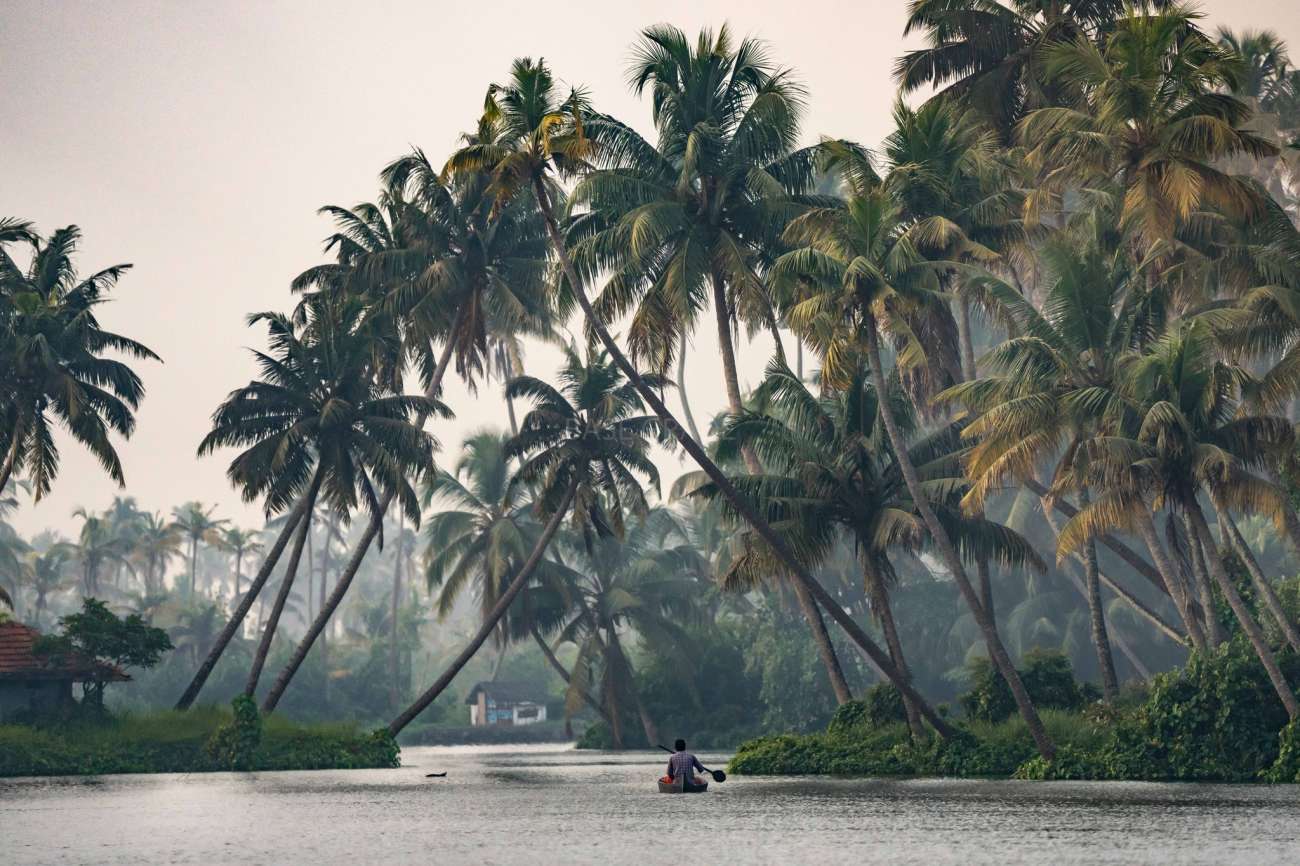

Kerala’s history is inseparable from the sea. The state’s 590-kilometer coastline, dotted with natural harbors, inland waterways, and river-mouth estuaries, made it one of the earliest maritime crossroads of the ancient world. The Arabian Sea was not a barrier-but a highway-and Kerala stood as a gateway that connected India to Arabia, Africa, Greece, Rome, China, and later Europe. The story of Kerala’s maritime heritage is therefore a story of global trade, cultural exchange, colonization, and resistance-a legacy shaped by monsoon winds and the irresistible allure of spices.
The Monsoon Winds: The Original Engine of World Trade
Kerala’s maritime prominence began with geography. Ancient navigators discovered that the southwest monsoon winds carried ships directly from the Arabian and Persian coasts to Kerala’s shores in just weeks. The return northeast monsoon took them home. This predictable seasonal wind cycle allowed Kerala to become the center of long-distance ocean trade as early as the 3rd millennium BCE.
This natural advantage enabled Kerala to become the world’s earliest supplier of:
- Pepper (referred to as black gold)
- Cardamom, cinnamon, and ginger
- Ivory, pearls, and timber
Among these, pepper was prized so highly that it was used as currency in Europe. The promise of pepper drew traders across continents for over 2,000 years.
Muziris: The Lost Port of Legends
Around the 1st century BCE to the 4th century CE, the port city of Muziris (Muchiri) in present-day Kodungallur became one of the busiest maritime trade centers in the ancient world.
Mentioned in:
- Sangam Literature (Pathitrupathu, Akananuru)
- The Periplus of the Erythraean Sea (1st CE Greek–Egyptian trade manual)
- Roman historian Pliny the Elder’s writings
- Ptolemy’s Geographia
Roman ships sailed directly to Muziris, bringing gold coins, wine, coral, and silver. Excavations at Pattanam (believed to be ancient Muziris) have uncovered:
- Roman amphorae jars
- Gold coins of Emperor Augustus and Tiberius
- Mediterranean glassware
- Yemeni incense
At its peak, Muziris was larger than many port cities in Europe.
Ports That Linked Civilizations
After Muziris declined-possibly due to a massive flood of the Periyar River-Kerala’s maritime hubs shifted across time:
| Port | Region | Era of Prominence | Trade Links |
| Tondi | Northern Kerala | Sangam Age | Arabs, Phoenicians |
| Vallarpadam & Mattancherry | Kochi | 14th–20th CE | Europe, Middle East, China |
| Beypore | Kozhikode | 12th–19th CE | Arabia (Uru shipbuilding) |
| Kollam (Quilon) | South Kerala | 9th–16th CE | China, especially Song Dynasty |
Zheng He and the Kerala–China Maritime Route
In the early 15th century, the Chinese admiral Zheng He visited Kollam multiple times with his massive treasure fleet. Chinese pottery, coins, and silks flowed to Kerala’s ports, while Kerala exported spices and hardwood.
This also explains:
- Chinese fishing nets in Kochi
- Local word “Chini” for porcelain
Calicut and the Age of the Zamorins
By the 12th century, Calicut (Kozhikode) had emerged as the leading spice port under the Zamorins (Samoothiris). Arab traders, especially from Oman and Yemen, settled in large numbers, giving rise to the Mappila Muslim community-a maritime merchant society fluent in Arabic commerce.
The Era of European Arrival: Competition for the Spice Crown
The arrival of Vasco da Gama in Calicut in 1498 marked a global shift. Europe had finally found a sea route to the source of pepper.
Sequence of Colonial Powers in Kerala:
- Portuguese (1498-1663) – attempted trade monopoly; defeated by local forces and the Dutch.
- Dutch (1663-1795) – expanded spice control; ultimately weakened by local resistance and Mysore Wars.
- British (1795-1947) – consolidated administration and shifted export trade to Bombay and Madras systems.
Despite colonial pressure, Kerala retained its maritime identity through:
- Indigenous Uru shipbuilding in Beypore
- Seafarers of the Lakshadweep and Malabar coasts
- Local merchant guilds and spice growers
Shipbuilding Tradition of Beypore
Beypore, near Kozhikode, became a legendary center for Uru (large wooden dhow) construction. These handcrafted oceangoing vessels still sail to UAE, Oman, and Qatar, testament to Kerala’s living maritime heritage.
Backwaters: The Internal Trade Artery
Kerala’s backwaters formed a natural inland navigation network, linking ports to the hills where spices were grown. Traditional cargo boats, Kettuvallams, transported goods long before roads existed. These boats, transformed today into houseboats, are a modern reminder of Kerala’s maritime past.
Kerala’s Maritime Heritage Today
- The Cochin Port remains one of India’s busiest international ports.
- Vallarpadam International Container Terminal is among South Asia’s major transshipment hubs.
- Traditional boat races like Nehru Trophy Vallamkali keep maritime culture alive.
Conclusion
Kerala’s maritime history is not merely a chronicle of trade—it is a saga of exchange, diplomacy, craftsmanship, and cultural synthesis. The world came to Kerala in search of pepper, but left with much more: knowledge, faiths, languages, music, and art. In return, Kerala absorbed global influences while shaping them into something uniquely its own.
The sea continues to define Kerala-its economy, culture, cuisine, and global outlook. The Arabian Sea remains, as always, not the edge of Kerala-but its connection to the world.







Leave a Comment